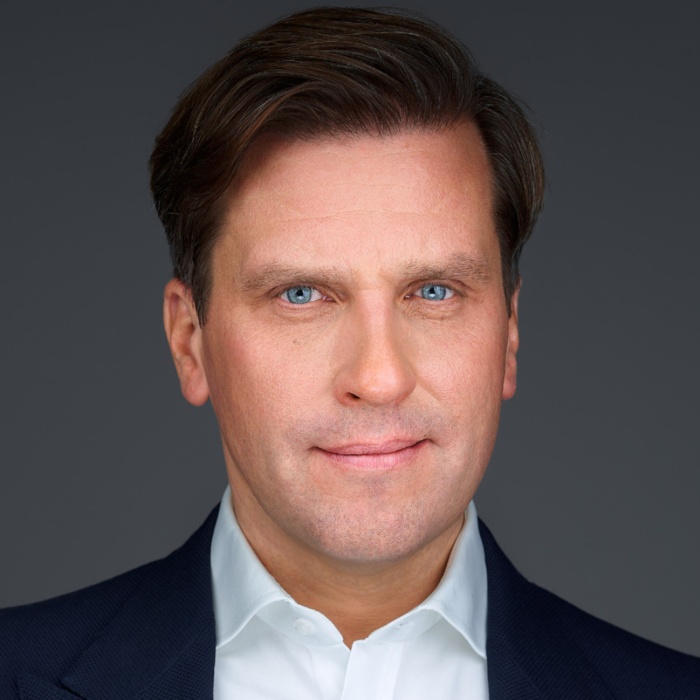
Grzegorz Należyty leads the Siemens Energy international operations, with responsibility for business in Eastern Europe Region. He also oversees the company’s ongoing expansion efforts into polish market in the area of energy generation, transmission and distribution, oil & gas and hydrogen.
Managing Director with deep understanding of energy sector, who professionally implements a strategy aimed at transforming the Polish sector, implementing solutions that protect the climate and the environment. Conduct progressive activities for the sustainable development on the energy field.
He has been associated with Siemens since 2001. In his pervious role with Nokia Siemens Networks, he was responsible for supervising the sales of Managed Services in the Western and Southern Europe region, and then as an Account Manager he was responsible for cooperation with T-Mobile. In the following years, he managed the activities of Nokia Siemens Networks in the Central and Eastern Europe region, and then he was the director of sales of Business Solution to Western Europe clients.
Graduated of Harvard Business School, Cambridge Business School, MBA program and Information Technologies Faculty at the Technical University in Bialystok.
Siemens Energy is one of the world’s leading energy technologies, with around 99,000 worldwide in more than 90 countries and generated revenue of €31 billion in 2023. An estimated one-sixth of the electricity generated worldwide is based on technologies from Siemens Energy. The company works with its customers and partners on energy systems for the future, thus supporting the transition to a more sustainable world. With its portfolio of products, solutions and services, Siemens Energy covers almost the entire energy value chain – from power and heat generation and transmission to storage.
2026-09-03
- Main Stage
As the Baltic Sea region looks beyond conventional energy pathways, emerging technologies such as carbon capture and storage (CCS), small modular reactors (SMRs), and e-fuels are gaining str...
As the Baltic Sea region looks beyond conventional energy pathways, emerging technologies such as carbon capture and storage (CCS), small modular reactors (SMRs), and e-fuels are gaining strategic importance.
This panel will explore the role of these next-generation technologies in shaping the Baltic energy future and discuss the conditions needed to accelerate their development and deployment across the region.