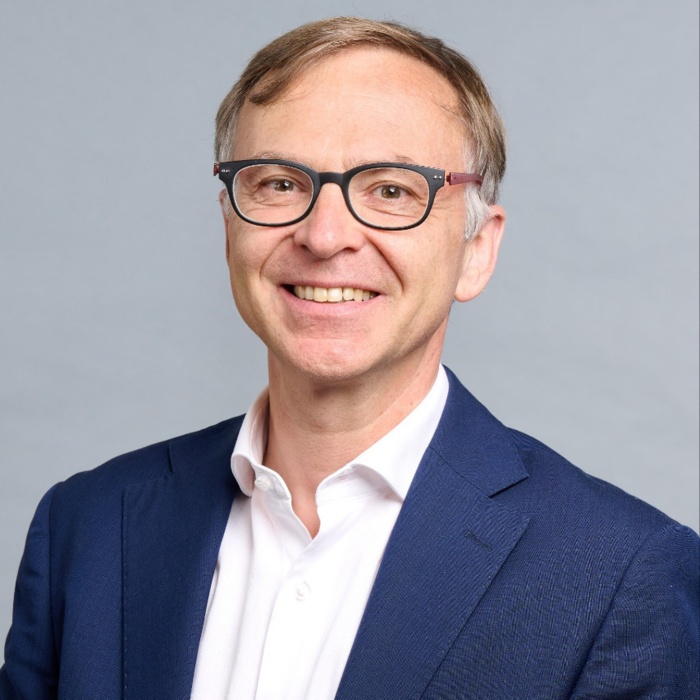
He leads the Forum’s work to accelerate secure, sustainable, and equitable energy and materials transitions by mobilizing collaboration between industry, government, and civil society.
Directing a dynamic team working on global initiatives across industrial decarbonization, critical minerals, clean fuels, power system transformation, and financing for clean energy. He works with leaders across energy, materials, and infrastructure value chains to shape shared strategies and drive coordinated action.
Roberto also leads the Content and Programming for the Forum’s Beijing office. He aligns global priorities with China’s strategic agenda and strengthens engagement with government, business, academia, and innovators across themes including industrial transformation, nature and climate, and economic resilience.
Before joining the Forum, Roberto spent 14 years at BP in senior roles across strategy, business development, supply and trading, and alternative energy, with assignments in Europe, Asia, and Africa. He holds a degree in Business and Economics from the University of Turin.
2026-09-03
- Main Stage
- Main Stage
With significant offshore wind resources, growing gas infrastructure, strategic interconnections, and a strong industrial base, the Baltic Sea Region is uniquely positioned to strengthen Eur...
With significant offshore wind resources, growing gas infrastructure, strategic interconnections, and a strong industrial base, the Baltic Sea Region is uniquely positioned to strengthen Europe's energy security while supporting economic growth and industrial competitiveness.
This panel will explore the key growth engines shaping the Baltic energy landscape and examine how investments, regional cooperation, and cross-border infrastructure can help unlock the Baltic Sea region's full potential.